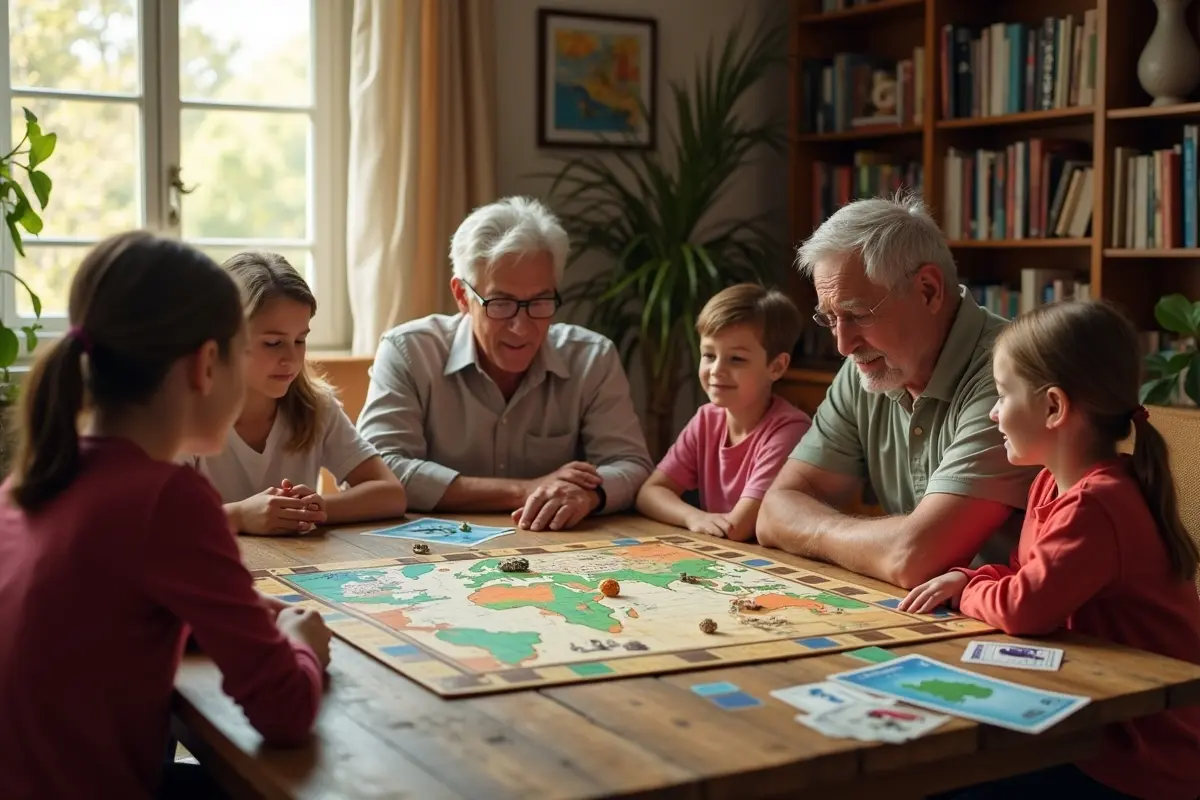
Educational board games offer families a unique way to combine learning and fun, creating opportunities for quality time together. Beyond simple entertainment, these games can help children develop critical thinking, problem-solving skills, and social abilities such as cooperation and communication. Engaging in gameplay as a family encourages positive interactions, strengthens bonds, and allows parents to guide children in a supportive, interactive setting. The structure of board games also introduces children to essential concepts, such as strategy, logic, and memory, in a way that feels natural and enjoyable.
In particular, easy-to-learn board games for kids provide an accessible entry point for younger players or those new to tabletop gaming. Their simplicity ensures that children can grasp rules quickly, while still offering meaningful educational content. By incorporating such games into family routines, learning becomes a shared experience that blends entertainment with cognitive development, fostering lasting skills that extend beyond the game itself.
Cognitive Development Through Play
Educational board games provide a stimulating setting for cognitive development. Games that require players to strategize and solve problems—such as managing resources or deducing clues—help enhance analytical thinking and mental flexibility. Many contemporary games ask players to plan several steps ahead, predict opponents’ moves, and adapt to unexpected challenges during gameplay. This mental activity strengthens working memory, boosts focus, and encourages approaching problems from multiple perspectives.
Research indicates a correlation between regular participation in board games and improvements in visuospatial memory, logical reasoning, and math skills in children. These benefits become evident in activities like understanding game rules, employing strategies, and performing simple calculations during play. Such cognitive enhancements give children an edge both academically and in everyday decision-making.
Enhancing Social Skills and Teamwork
Interpersonal skills blossom while playing board games. Family members must explain their ideas, negotiate peacefully, and collaborate to achieve shared objectives or resolve challenges. This style of play enhances communication and fosters empathy, while also teaching kids the subtleties of effective teamwork. Engaging in board games often means learning to listen well, express oneself clearly, and offer constructive feedback, which are critical skills for children as they grow.
Games that require cooperative play, rather than competition, are especially valuable for building a sense of unity and understanding among family members. Interactive play provides a safe space for children to practice social cues, resolve conflicts, and develop patience, all while enjoying themselves in the company of loved ones. These lessons help build confidence in engaging positively with peers in various social environments, such as school or community groups.
Strengthening Family Bonds
Regularly scheduled board game nights offer a chance for meaningful, uninterrupted time together. Shared experiences like these help develop trust and encourage positive dialogue in a relaxed environment. For families juggling full schedules, game nights can serve as a weekly anchor—an event that brings everyone together and sets aside time for genuine interaction.
These simple routines can serve as the foundation for open communication, improved mental health, and relationships that withstand the tests of time and the challenges of growing up. Sharing jokes, friendly competition, and even the gentle disagreements that sometimes arise in games help families get to know one another better. These moments create a safe space for learning about personal strengths, quirks, and preferences, ultimately fostering stronger, more resilient family ties.
Reducing Screen Time and Stress
A noticeable benefit of board games is their ability to draw families away from screens—a welcome change in a technology-saturated world. Game nights create opportunities for laughter and emotional release, easing stress and promoting mental wellness for everyone. From the youngest to the oldest family member, everyone can set aside distracting devices and instead focus on the people around them, enjoying shared stories and the thrill of the game.
Furthermore, an environment free from digital distractions encourages mindfulness, patience, and richer conversation among family members. Stepping away from digital stimulation helps regulate sleep patterns, reduces anxiety, and provides the mental downtime necessary for healthy growth and relaxation.
Educational Value Beyond the Classroom
Many educational board games develop essential skills in an engaging, hands-on manner. Word games enhance vocabulary, reading, and spelling, while math and science games improve reasoning and computational abilities. These games support classroom instruction, stimulate curiosity, and demonstrate how academic concepts can be applied creatively and effectively. They foster a deeper interest in various subjects, allowing children to practice skills and discover their strengths.
Game-based learning offers a safe environment for experimentation and learning from mistakes, which helps build confidence and promotes a growth mindset. Additionally, parents can identify which subjects their children enjoy or find challenging, enabling personalized learning approaches.
Encouraging Healthy Competition and Resilience
Experiencing both wins and losses in a low-stakes, friendly setting teaches children important life lessons about perseverance, humility, and resilience. Learning how to remain gracious during defeat and modest in victory builds emotional intelligence and sets the stage for healthy competition both on and off the game board.
Board games enable families to reinforce values such as fairness, honesty, and respect for rules, all while maintaining a friendly and lighthearted atmosphere. Encountering setbacks in games provides children with an opportunity to practice coping with frustration and disappointment in a supportive environment, equipping them with the skills to recover from challenges and persist toward their goals.
Conclusion
The habit of playing educational board games as a family is both enjoyable and profoundly enriching. From cognitive and social development to the creation of treasured family memories, board games offer lasting benefits that extend far beyond the game itself. By promoting learning, connection, and fun—all without screens—families can foster an environment where everyone thrives and grows together.
Embracing board game nights means investing in relationships, well-being, and the lifelong growth of every family member. As children grow and families evolve, these simple shared experiences are remembered and appreciated, becoming touchstones of love, understanding, and joyful learning.