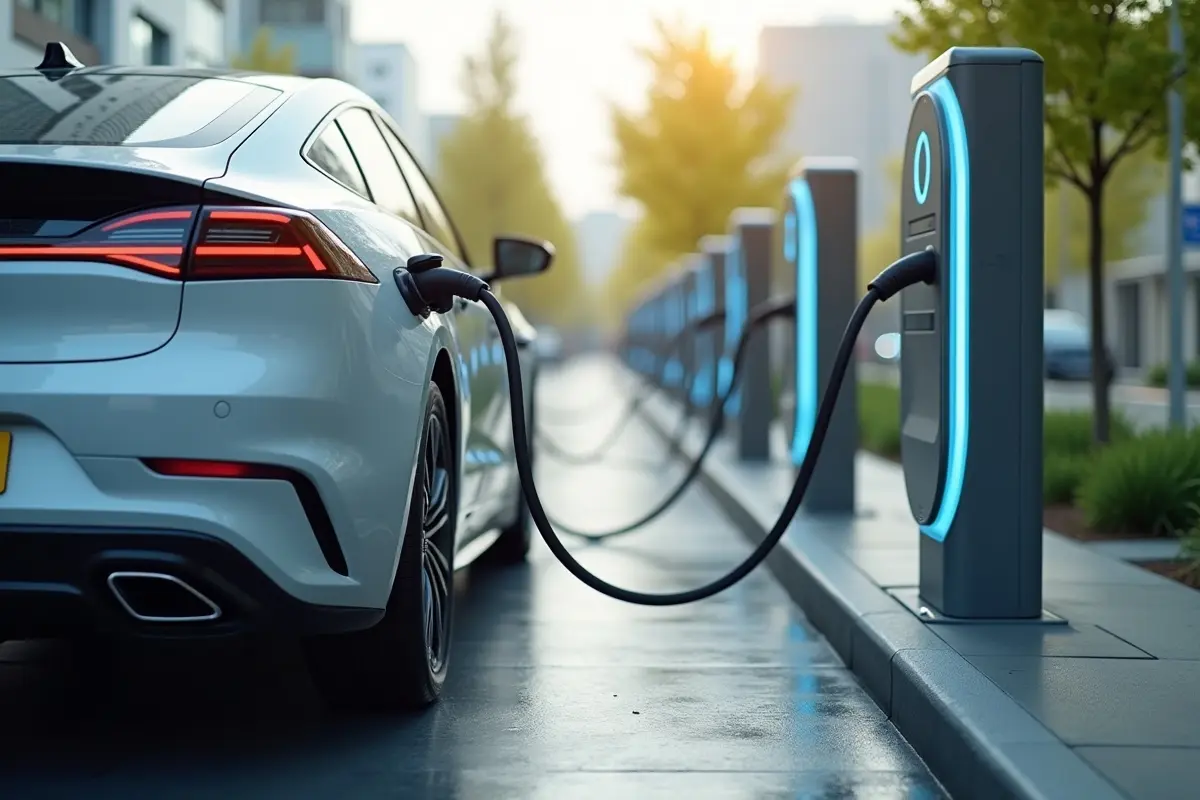
Electric vehicles (EVs) are rapidly transforming how we think about transportation, promising a cleaner, more efficient, and ultimately more sustainable future. As the world looks for solutions to combat climate change and urban pollution, EVs have emerged as a practical alternative to traditional fossil-fuel-powered vehicles.
However, early adoption of EV technology was significantly hindered by two major factors: lengthy charging times and a lack of widespread infrastructure. Recent leaps in charging technology, however, are completely revolutionizing how drivers recharge on the go. Today’s cutting-edge solutions, like the DC fast charger for sale, are not only drastically lowering charging times but are also propelling EVs into the mainstream, making them a viable option for more people than ever before.
These innovations are more than mere conveniences; they are breaking down some of the biggest barriers that have traditionally kept drivers from switching away from fossil fuels. By introducing rapid charging capabilities, wireless charging options, and smart grid connectivity, the future of EV ownership is quickly becoming more practical and appealing for everyone. The growing versatility of these solutions is giving users confidence that switching to an EV won’t require sacrificing their routines or travel flexibility.
Ultra-Fast Charging Technologies
Among the most significant breakthroughs in the EV landscape is the proliferation of ultra-fast charging stations. These advanced charging units can bring a vehicle’s battery to 80% capacity in as little as 20 minutes, far outpacing older, slower Level 2 chargers. For drivers, this means an average charging stop can be as short as grabbing a cup of coffee, setting entirely new expectations for convenience and vehicle usability.
By shortening charging stops and making them more efficient, ultra-fast chargers are helping to eliminate one of the most persistent forms of “range anxiety,” the fear of being stranded with a depleted battery that historically deterred potential EV buyers.
High-power charging systems are now being rolled out at a wide variety of locations, from highway rest areas and major shopping centers to high-traffic urban hotspots. This growing presence lets EV owners travel both short and long distances with minimal planning or delay, improving public perception that EVs can rival gasoline-powered vehicles in practicality.
With these new networks of rapid chargers, the experience of charging an EV is becoming more comparable to the quick refueling stops at gas stations that drivers are accustomed to, a crucial shift for achieving mainstream adoption of electric vehicles.
Wireless and Contactless Charging Solutions
The next wave of EV charging innovation is unfolding through wireless and contactless charging technologies. With these solutions, drivers can recharge their vehicles simply by pulling into a parking space and positioning the car over a special charging pad, eliminating the hassle of plugging and unplugging cables.
For busy urban drivers, taxi fleets, and public transport operators, this technology can mean seamless battery top-offs throughout the day, increasing uptime and extending battery health by encouraging regular, partial recharging, rather than deep discharges.
Research suggests that wireless charging offers several advantages beyond convenience. It eliminates the physical wear and tear that cables and connectors typically endure, reducing maintenance costs and increasing the reliability of public charging stations.
Wireless charging systems also reduce the risk of user error, such as improper connections, faulty cables, or equipment vandalism, making them especially attractive for fleet operators and municipalities. Cities and commercial parking operators are piloting these new systems, aiming to make public and commercial EV charging as effortless and automatic as possible.
Vehicle-to-Grid (V2G) Integration
One of the most promising advancements in EV charging technology is the ability for vehicles to not only draw power from the grid but also return electricity when needed. This is known as vehicle-to-grid (V2G) integration, and it enables bidirectional energy flow between EVs and the power grid.
With V2G, EVs can charge during periods of low electricity demand and then supply stored power back to the grid during peak hours. This serves multiple purposes: it helps stabilize the grid, supports increased integration of renewable energy sources, and gives EV owners a way to participate in new, flexible energy markets.
Major V2G pilot programs around the globe have demonstrated that this technology can play a pivotal role in future energy transition strategies, especially as solar and wind energy become more prevalent but remain inherently variable. By turning EVs into mobile energy storage units, utilities can harness distributed energy resources to balance real-time consumption with fluctuating generation.
Collaborative Efforts to Expand Charging Infrastructure
Widespread EV adoption depends heavily on the growth of strong, reliable charging infrastructure. Automakers have responded proactively by forming strategic alliances and establishing joint ventures to develop high-capacity charging corridors connecting cities, suburbs, and rural areas.
Notably, a coalition of leading car manufacturers (Mercedes, BMW, GM, Stellantis, Honda, Hyundai, and Kia) has announced plans to roll out 30,000 high-power charging stations across North America. This initiative is specifically designed to ensure that drivers in both densely populated urban centers and isolated rural communities have reliable charging access, eliminating “charging deserts” and supporting the long-term growth of the EV market.
Government Initiatives Supporting EV Charging Expansion
Public sector support remains crucial to scaling up EV charging access and adoption. In 2023, the U.S. government took a significant step by introducing $623 million in targeted grants to create over 7,500 new charging ports across 22 states and Puerto Rico. Such investments are particularly focused on addressing critical gaps where private investment alone may not be sufficient, ensuring that rural and underserved communities are not left behind during the transition to electric mobility.
On a global level, similar initiatives are underway across Europe and Asia, with many governments offering direct consumer incentives, tax breaks, and financial support for network operators to accelerate the deployment of new charging stations. Many industry analysts see this coordinated public-private approach as the linchpin for achieving aggressive national and international climate targets and accelerating mass EV adoption worldwide.
Impact on EV Adoption and Consumer Confidence
The rapid expansion and continuous improvement of EV charging technology are directly addressing the concerns that once held back the majority of potential buyers. As charging infrastructure becomes more comprehensive and user-friendly, both individuals and businesses are increasingly viewing EVs as practical, everyday alternatives to gasoline-powered vehicles, as evidenced by surging sales of gasoline-powered vehicles for electric cars and substantial waitlists for new electric models from major automakers.
The collective improvement in convenience and reduction of range anxiety are building consumer confidence at an unprecedented rate.
Industry experts widely agree that the next wave of EV adoption will be driven as much by positive charging experiences and seamless infrastructure as by breakthroughs in vehicle design or performance. By focusing on creating fast, user-friendly, and widely accessible charging solutions, the automotive and energy sectors are paving the way for a transportation system that is smart, environmentally responsible, and adaptable to changing future needs.
Conclusion
Faster EV charging solutions stand at the very heart of the electric mobility revolution. From breakthroughs in ultra-fast and wireless charging to advanced vehicle-grid integration and broad industry-government collaboration, these advancements are making electric vehicles increasingly accessible and attractive to drivers everywhere.
Continued investment and partnership, both in the private and public spheres, will be essential to cementing the EV’s role as a cornerstone of modern transportation. Ultimately, these technologies provide a sustainable and efficient path forward, one that benefits not only today’s drivers but also generations to come, as the world transitions toward cleaner and smarter transportation solutions.