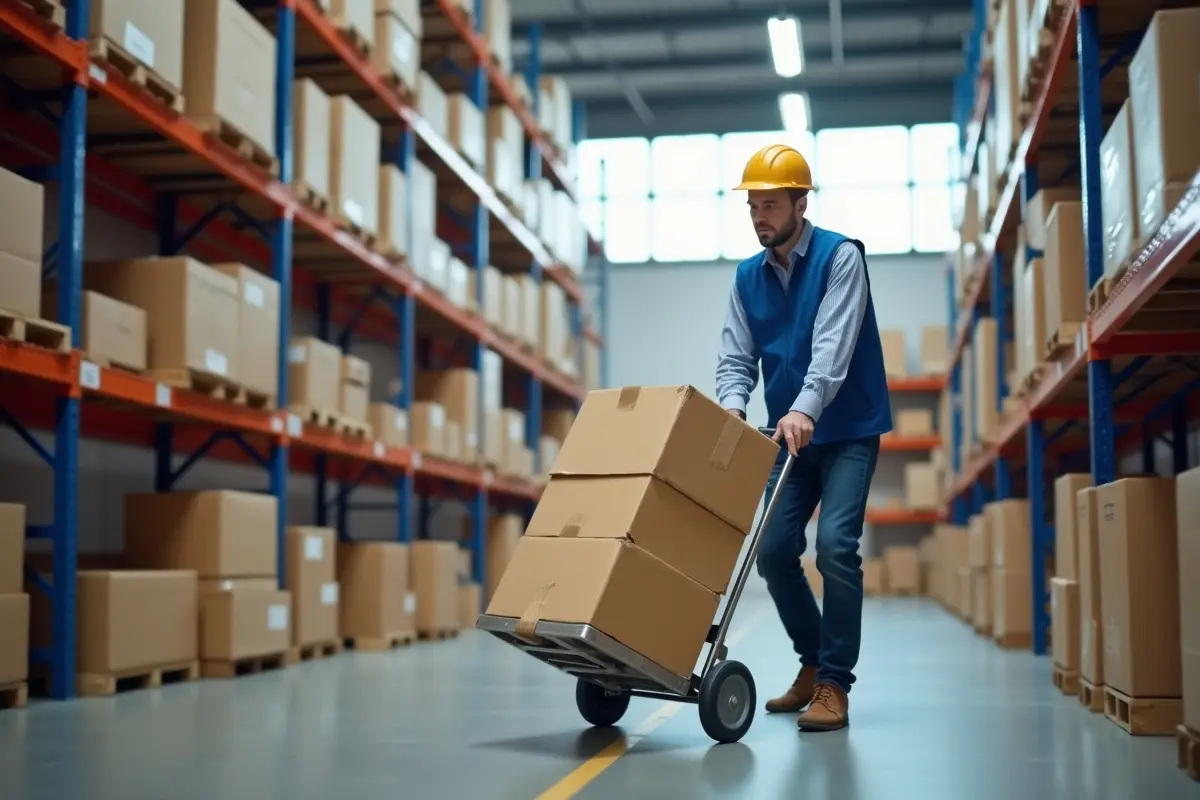
Modern warehouses must move goods quickly and accurately while prioritizing worker safety, particularly as order volumes increase and workflows become more complex. To keep pace, facilities are adopting material handling solutions that streamline movement, reduce strain, and support consistent productivity.
This includes using adaptable tools that help teams transport items efficiently while minimizing the risk of damage or injury. By integrating smarter equipment and clearer organization, warehouses can maintain a safe, orderly environment that meets the demands of today’s fast-moving supply chain.
IoT and Smart Equipment Integration
The deployment of IoT-enabled devices signals a new era of connectivity and efficiency for warehouses. With sensors, cameras, and wireless networks, equipment such as forklifts and warehouse carts can transmit operational data in real-time. This enables managers to monitor asset usage, ensure that preventive maintenance is scheduled, and respond rapidly to malfunctions.
Data collected by IoT devices provides insight into trends such as peak traffic times, equipment bottlenecks, and workflow inefficiencies. Predictive analytics further alerts supervisors to potential wear-and-tear issues before they escalate, keeping downtime at a minimum and extending asset lifespan. Walmart’s collaboration with Wiliot to deploy ambient IoT sensors across its supply chain has been pivotal in optimizing supply chains and reducing shrinkage.
Additionally, IoT integration supports smarter routing, enhances worker safety through automated alerts, and allows warehouses to scale operations more efficiently. As more facilities adopt interconnected equipment, IoT becomes essential for maintaining visibility, improving accuracy, and supporting data-driven decision-making across all material handling tasks.
Automation in Material Handling
Automation has fundamentally transformed warehouse logistics, introducing robust technologies that streamline the movement, storage, and retrieval of goods. AGVs and AMRs efficiently execute repetitive tasks, such as pallet movement and order picking, which previously required substantial human effort and time. With these solutions, modern warehouses experience a measurable boost in throughput and accuracy, as equipment operates tirelessly and precisely along programmed paths.
Automated storage and retrieval systems (AS/RS) further transform high-volume operations, integrating directly with inventory management software to ensure real-time stock visibility and rapid delivery.
Ergonomic and Safety Innovations
To protect workers, manufacturers have introduced significant ergonomic improvements in modern material handling equipment. Enhanced handle grips, padded platforms, and height-adjustable controls reduce strain and fatigue. Safety is further enhanced by advanced features such as auto-braking, speed governors, and 360-degree visibility cameras—especially valuable in congested warehouse environments where accidents frequently occur.
Employee training is another critical component, ensuring that operators understand the capabilities and safe practices associated with the equipment. The use of ergonomic design is about more than comfort—it translates directly into fewer lost workdays and lower worker compensation claims for warehouse operators. Coupled with technology such as automated alerts for collision or overload risks, overall incident rates can be significantly reduced.
Sustainability and Energy Efficiency
Forward-thinking organizations are embracing sustainable material handling solutions to drive down operational costs and meet environmental standards. Lithium-ion batteries are replacing traditional lead-acid alternatives in forklifts and other powered gear, providing longer run times, shorter charging cycles, and reduced hazardous waste. Solar-powered charging stations and energy-efficient conveyor belts are also being rolled out in distribution centers worldwide.
Industry leaders report significant returns on these investments, as energy bills decrease and green initiatives foster a positive public image. With regulators and partners demanding clearer carbon footprints, sustainable warehouse practices are no longer optional—they are essential for continued growth and profitability.
Best Practices for Implementation
- Assess Current Operations: Conduct a thorough evaluation of existing workflows, equipment, and facility layout to identify areas for automation and safety upgrades.
- Invest in Training: Comprehensive training ensures that all staff can operate new technologies confidently and safely, maximizing productivity and reducing risk.
- Monitor Performance: Use key performance indicators (KPIs) and analytics dashboards to measure the impact of newly implemented solutions and adjust strategies accordingly.
- Regular Maintenance: Schedule routine inspections and preventive services to extend equipment life, prevent breakdowns, and ensure compliance with safety regulations.
Conclusion
Modern warehouses can enhance efficiency and safety by adopting advanced material handling technologies. Utilizing automation, IoT connectivity, ergonomic tools, and sustainable practices enhances productivity while promoting a safer and more environmentally friendly environment. Applying these best practices and selecting appropriate equipment helps facilities stay ahead in the logistics industry.