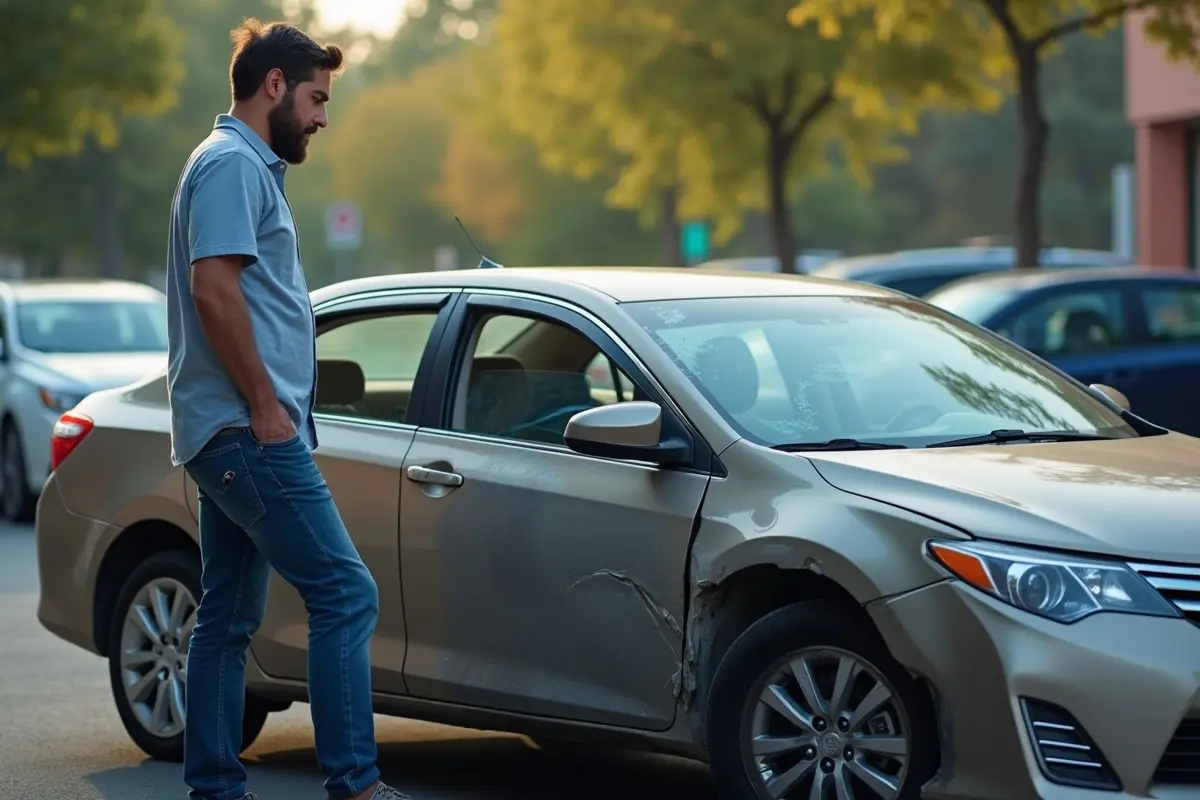
Coming back to your car and seeing a new dent, scraped bumper, or broken mirror can instantly turn a normal day into a stressful one. Whether the other driver took off (hit-and-run) or left a note, what you do in the first hour can make a huge difference for your insurance claim, repair timeline, and—if you were inside the car—your injury case.
This guide walks you through the smartest, most practical steps to take after your parked car is hit, plus common mistakes to avoid.
Immediate Steps After Discovering Your Parked Car Was Hit
Stay calm and take a quick safety scan
Even though your car was parked, you still want to make sure the area is safe—especially in busy lots, garages, or tight streets. Look around for traffic hazards, broken glass, or debris. If your vehicle is in a dangerous spot and it’s safe to do so, move it to a safer location before you start documenting everything.
Call the police (especially for hit-and-runs)
If the driver is gone, treat this as a hit-and-run and call law enforcement. A police report can be critical for proving what happened and supporting your insurance claim.
Even if the damage seems “minor,” a report helps establish:
- The time and location
- That your vehicle was parked
- The fact that the other driver left the scene
- Any witness statements or nearby camera notes
If an officer can’t come out, ask how to file a report online or by phone and request the report number for your records.
How to Document the Scene Like Your Insurance Company Will Question Everything
Take photos like you’re building a case file
Use your phone and capture more than just the damage. The goal is to show context and proof, not just a scratch.
Take clear photos of:
- The damage from multiple angles (close-up and wide)
- Your license plate and VIN area (if visible)
- The full parking spot/location (include signs, stall number, street name, or landmarks)
- Any debris, paint transfer, broken parts, or tire marks
- Lighting/weather conditions if relevant (rain, glare, darkness)
If you can, take a short video walking around the vehicle while narrating the date/time and what you’re seeing.
Write down details immediately
Your memory fades faster than you think. Create a quick note in your phone with:
- Date and time you discovered the damage
- Where the vehicle was parked and how long it had been there
- Any suspicious details (fresh debris, parts on the ground, nearby construction)
- Names and contact info of witnesses
Check for Security Cameras and Witnesses Before You Leave
Look for cameras in the most likely places
Parking garages, retail entrances, apartment gates, and corner businesses often have cameras. If you’re in a shopping center, ask a manager or security office whether footage might exist.
A key tip: footage may be overwritten quickly, so ask as soon as possible. Even if they won’t release it to you directly, they may preserve it for law enforcement or insurance.
Ask witnesses the right way
If anyone saw what happened, get:
- Their name and phone number
- A brief description of what they observed
- The make/model/color (or partial plate) of the other vehicle if they remember
Don’t pressure them—just collect what you can.
What If the Other Driver Left a Note?
Don’t assume a note solves everything
If you find a note, that’s helpful—but you still need to protect yourself and your claim.
Do this immediately:
- Photograph the note exactly where it was left
- Save it in a safe place
- Confirm the note includes name + phone + insurance info (if provided)
Then:
- File a police report anyway (or at least report the incident)
- Call your insurance company and provide the note details
- Avoid negotiating directly in a way that leaves you unprotected (like “I’ll pay you cash” arrangements)
A note can still lead to disputes later—especially if the other driver changes their story or their insurer challenges fault.
If You Were In the Car When It Was Hit
Treat it like any other injury-related collision
Even low-speed impacts can cause injuries—especially neck/back strain, headaches, or worsened prior conditions.
If you were inside the vehicle:
- Call 911 if you feel pain, dizziness, or any symptoms
- Seek medical evaluation the same day (or as soon as possible)
- Document your symptoms and how they develop over the next 48 hours
- Keep all medical paperwork and receipts
Insurance companies often minimize injuries in “parked car” cases, so timely medical documentation matters.
Insurance Coverage Options for Parked Car Accidents
Collision coverage (your own policy)
If you have collision coverage, your insurer may cover repairs regardless of whether the other driver is identified—though you may have to pay your deductible.
Uninsured/underinsured coverage (varies by policy/state)
If the driver fled and can’t be found, certain policies may provide coverage in hit-and-run situations. Coverage depends on your specific policy language and where the crash occurred.
If the other driver is identified
If you have their insurance info (from a note, witness, or footage), you can file a claim against their property damage coverage. Your insurer may still assist and then pursue reimbursement through subrogation.
Mistakes That Can Hurt Your Claim
Leaving without documenting everything
A few photos isn’t enough. The more complete your documentation, the harder it is for an insurer to dispute the facts.
Waiting too long to report it
Delays give insurers room to argue the damage happened elsewhere or at a different time. Report it promptly.
Posting about it on social media
Even a casual “ugh someone hit my car” post can become evidence if there’s a dispute (especially in injury claims). Keep details private.
Accepting a “cash deal” without protection
Some drivers offer to pay cash to avoid insurance. That can backfire if hidden damage is discovered later, the driver ghosts you, or the repair estimate skyrockets.
When to Talk to a Lawyer
If this was purely property damage and the facts are clear, insurance may be straightforward. But legal help becomes valuable when:
- The crash caused injuries (even “minor” ones)
- It was a hit-and-run with serious damage
- The insurer delays, underpays, or disputes the claim
- You’re being blamed or questioned unfairly
- You need help gathering evidence (cameras, witnesses, reports)
A lawyer can help coordinate evidence, communicate with insurers, and protect your rights—especially when medical treatment and lost time become part of the picture.
If you need help after a parked car accident in Nevada, talk to a Las Vegas Personal Injury lawyer who can review the facts and explain the cleanest path forward.
FAQ
Should I call the police even if the damage looks minor?
Yes—especially if the driver is gone. A report creates an official record that supports your insurance claim and establishes the incident as a hit-and-run if applicable.
What if I don’t know when the accident happened?
Document when you discovered the damage, where you were parked, and the last time you saw the vehicle undamaged (if you can reasonably estimate). Photos and camera footage can help narrow the timeline.
Can my insurance raise my rates if I file a claim for a parked car hit?
It depends on your policy and claim history. Some claims may have less impact when you’re clearly not at fault, but insurers vary.
What if my car was illegally parked—does that change things?
It can complicate fault arguments, but it doesn’t automatically eliminate the other driver’s responsibility. Evidence matters.
What if there’s hidden damage I don’t see right away?
That’s common. A bumper may look fine but have internal damage. Get a professional inspection and avoid “cash deals” that don’t account for later findings.