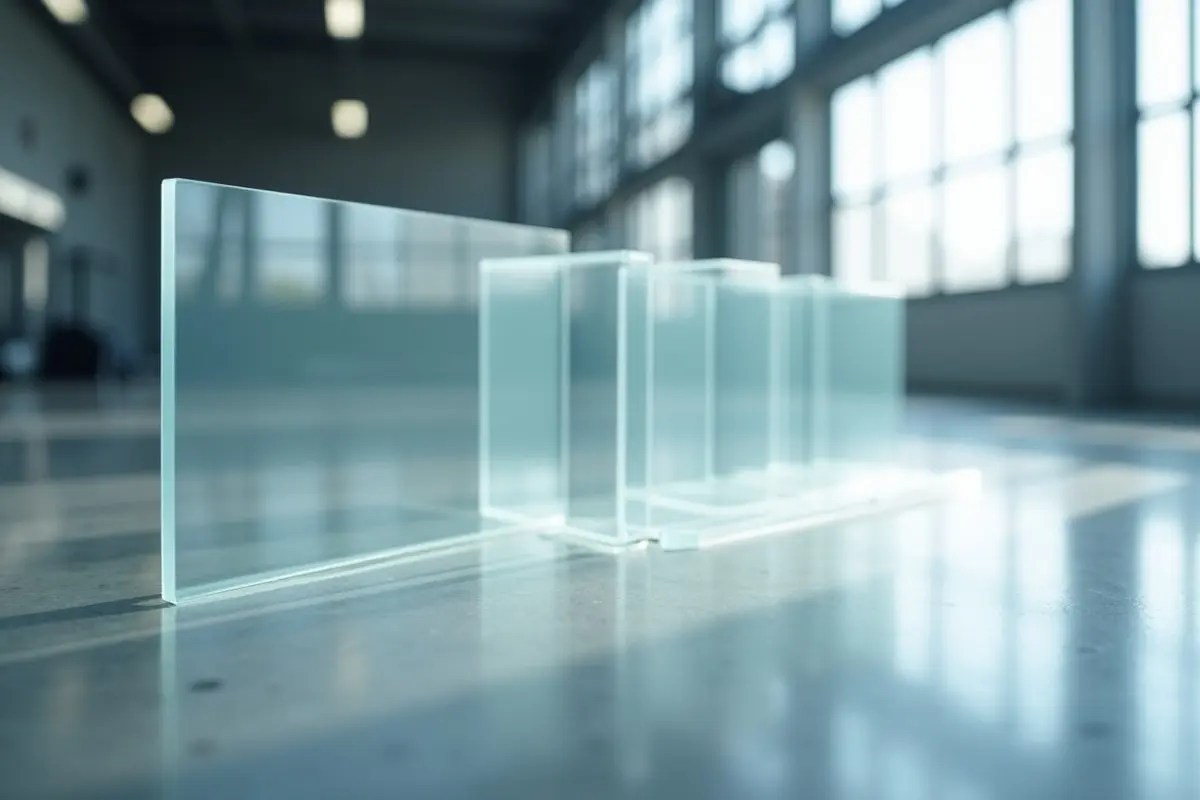
Acrylic is treated as if it were an everyday product. It is specified by architects, cut by fabricators, and most individuals believe that the variations in performance between the different grades are insignificant. But that is not true.
Polymethyl methacrylate – PMMA – is a thermoplastic that has a group of mechanical and optical characteristics that in the right context are far superior to glass in nearly every aspect that can be measured. The difficulty is that most specifications still automatically select glass because that is the habitual decision, rather than a decision based on engineering logic.
Cast vs. extruded: the grade difference that actually matters
Perspex and similar sheet products have two types of manufacturing – cast and extruded – with a quite noticeable difference in qualities for precision work.
Cast acrylic is basically polymerized in a mold, usually between glass plates. This process yields a higher molecular weight. The increased chemical resistance, thickness tolerance on larger sheets, and polished results are obvious. When machining, a CNC router or laser cutter with a cast sheet goes through the process smoothly – edge quality is better, less melty, less chip, tighter tolerances.
Extruded is quicker and cheaper to produce, and perfectly fine for lots of application, but cast is the correct choice for anything requiring solvent bonding, optical clarity over large areas, or any machining to tight specs. I wouldn’t even consider using extruded for the previous list.
Optical performance beyond basic clarity
Acrylic is often perceived as having a “warmer” feel than glass. It has slightly lower heat transfer by conduction (0.19 W/mK vs. 1.05 W/mK for glass), and its thermal conductivity remains stable across temperatures, unlike glass, which can become less predictable as the mercury drops. Acrylic’s optical clarity is excellent for a polymer, with just a 2% difference in visible light transmission compared to 2mm pane glass.
Fire performance and building code compliance
New types of acrylic, such as fire-retardant acrylic, can reach the V-0 level on testing. This new-generation transparent thermoplastic can self-extinguish after the finished product is removed from a direct fire. It won’t produce new heat, gas, or droplets when it’s subjected to a fire.
Thermal performance and formability
Acrylic outperforms glass in both thermal insulation and formability. Thermal insulation may not matter if you’re specifying three-eighths inch acrylic to replicate the view performance of quarter-inch glass. But if you’re upping the thickness for other reasons, such as for a rooftop observation deck or a ground-floor lens panel, the additional thickness contributes to less heat gain with acrylic, meaning better insulation performance.
And for curved or complex forms, acrylic can do so optically without distortion. Acrylics is known for its optical clarity, and the right material and methods will preserve that clarity even when it’s been bent, shaped, or routed into precise geometric forms. But you’ve got to use the right grade, and the right fabrication techniques, delivered with tight, controlled tolerances. Productive Plastics handles both the material selection and the precision fabrication side, which matters when tolerances aren’t flexible.
Long-term cost efficiency
Acrylic is often touted for its “higher impact resistance compared with glass”. However, it’s the long-term lifecycle where bigger benefits come in. Fewer replacements means lower environmental impact. Quality acrylic sheet should come with UV protective layers which can ensure no loss in light transmission over it’s lifetime, with a protection guaranteed not to yellow, crack or blister for 30 years. With improvements in glass UV resistance and increased use of coatings the differential is less. However, recycled acrylic is increasingly used in new production without any loss of optical performance or protection. Electrical dielectric strength: Acrylic has a high dielectric constant – among the highest of any thermoplastic at room temperature and low frequencies. This means it is often the material of choice for electrical and industrial applications, and where optical clarity is important such as in control panels, equipment housings, and display cases.
Choosing the right grade for the application
The science behind PMMA materials is known. The source of most project issues is an assumption of sheet generic optimization, with cast grades substituted by extruded, general-purpose grades used in UV-exposed locations, and standard sheet applied to projects with a fire performance requirement.
Acrylic outperforms glass in some of the world’s most demanding applications. The challenge is to ensure the right product is sourced at the start. The answer lies in the chemistry. And the chemistry is clear.