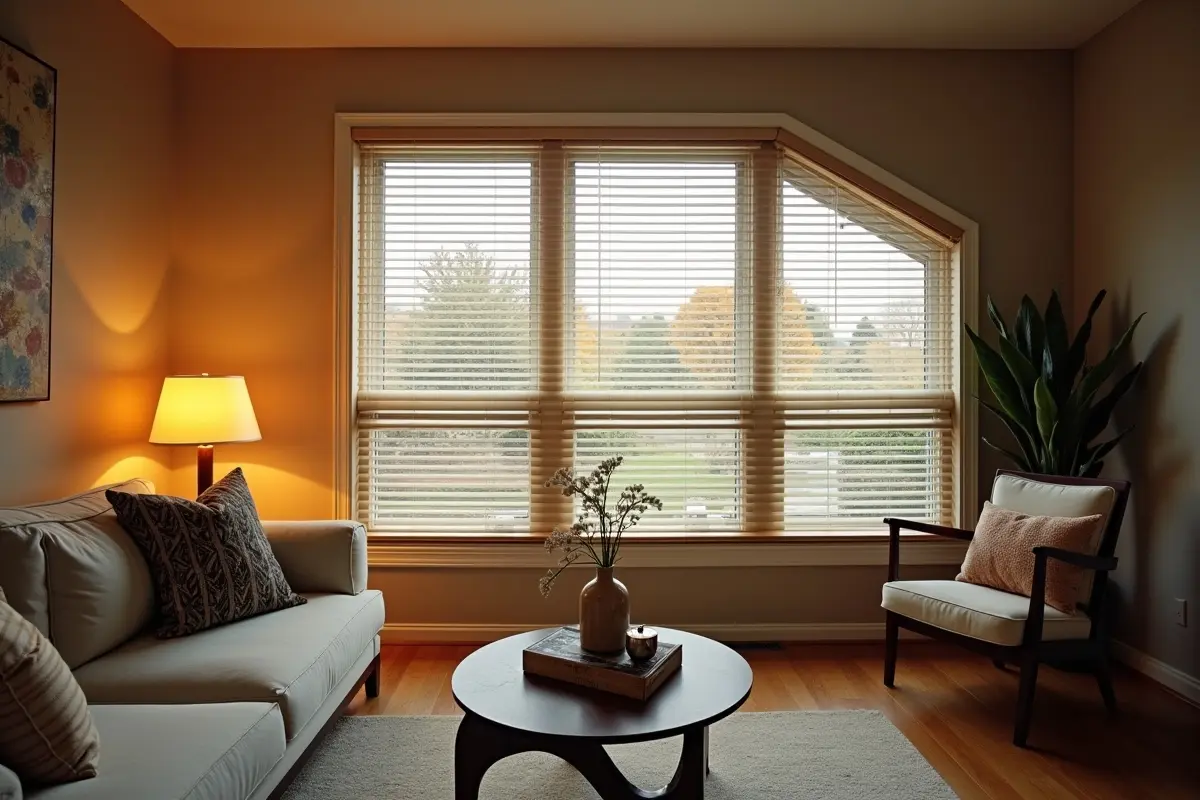
Specialty-shaped windows can bring character, daylight, and memorable views to a Cumming, Georgia home, but they also require more planning than a standard rectangular opening. Arches, angled glass, bay windows, transoms, and tall picture windows all have different needs for privacy, glare control, and everyday use. Selecting custom blinds can help homeowners focus on the window’s actual dimensions and function rather than trying to adapt a standard-size product to an unusual space.
The right treatment should support the room’s use while allowing the window’s architecture to remain part of the design. In rooms that receive strong afternoon light, light filtering may be the priority. In a bathroom, bedroom, or street-facing living area, privacy may come first. Beginning with the window shape and the room’s purpose makes the decision more manageable.
Why Specialty Windows Need a Different Plan
Off-the-shelf blinds are generally designed for predictable rectangular openings. On curved, narrow, or angled windows, they may leave light gaps, interfere with trim, or hide an architectural feature that should remain visible. Window depth, nearby handles, the direction the window opens, and whether the glass is easy to reach all affect which mounting and operating options are practical.
An arched window above a bed, for example, may need privacy only across its lower rectangular section. Covering the entire arch could reduce daylight without solving an additional problem. Homeowners comparing custom window treatments can use this same approach: identify the problem first, then choose the amount of coverage and level of adjustability needed.
Identify the Window Shape
Before comparing materials, classify the opening and take clear photos from inside the room. Useful categories include:
- Arched and half-round windows, which may need a fixed or shaped upper treatment.
- Triangle and angled windows, where the slope affects fit and light gaps.
- Bay and bow windows, which combine several separate panels at changing angles.
- Circle, oval, and octagon windows often serve as architectural accents.
- Transoms and narrow sidelights, which may need privacy without visual bulk.
- Large picture windows and floor-to-ceiling glass, where glare, views, and operation matter.
- Skylights and high windows, which require a realistic access plan.
Match the Treatment to the Main Goal
A treatment that looks right may still be frustrating if it does not perform the job the room requires. Consider whether the priority is privacy during the day and at night, softer daylight, reduced glare on screens, room darkening, or preserving a view. For windows exposed to changing sunlight, adjustable coverage can provide more flexibility than a fixed solution. If the treatment will be raised or tilted frequently, ease of operation deserves as much attention as appearance.
Compare Blind and Shade Options
Different products suit different shapes, mounting depths, and design preferences. Reviewing flexible blind styles can help clarify the basic differences between blinds and shades in how they manage light and visibility.
Common options to consider
- Roller shades: Clean and simple for straight sections, particularly when a low-profile look is preferred.
- Cellular shades: A soft option for rooms where diffused light and an added layer at the glass are useful.
- Wood, composite, or aluminum blinds: Adjustable slats can provide variable light control and a more structured appearance.
- Roman shades: Fabric construction adds visual warmth, although the stacked fabric should be considered when the shade is raised.
- Shutters: A fitted choice for many window shapes, especially where a more permanent architectural look is desired.
- Drapery panels: Helpful for framing groups of windows, tall glass, or openings that are difficult to cover with one movable treatment.
- Window film: A possible fixed option for privacy or glare reduction when opening and closing a treatment is unnecessary.
Decide Between Full and Partial Coverage
Full coverage is not always necessary. Lower-only coverage can address privacy while preserving daylight through an upper arch or transom. A fixed upper section may also be paired with an adjustable lower section. In larger rooms, drapery can frame a collection of windows rather than treating every pane separately. Thoughtful layered window treatments can combine a functional layer for light control with a softer layer for visual balance.
Measure Before Ordering
Accurate measurements are especially important when the opening is curved, angled, or tightly framed. Measure the full opening, not just the visible glass. Record width at the top, middle, and bottom, then record height at the left, center, and right. Also note available depth for an inside mount, frame irregularities, handles, locks, screens, trim, and nearby furniture. Photos from several angles can reveal obstructions that a single measurement may miss. Small errors are often more noticeable on specialty windows than on ordinary rectangular ones.
Plan for Operation and Access
Manual controls can work well on windows that are comfortably within reach. High, wide, or awkwardly placed windows may be better suited to a motorized operating method. Confirm that the treatment will not block the sash, collide with a handle, or impede cleaning. Homes with children or pets should also consider cordless or otherwise simplified control options. A treatment that is difficult to adjust often stays in one position, limiting its usefulness.
Balance Style Across the Room
Specialty windows look most intentional when they relate to the rest of the room without being forced to match exactly. Repeat a color, fabric texture, wood tone, or mounting detail across nearby windows. Keep proportions in mind: a heavy treatment can overwhelm a slim sidelight, while a very narrow shade may look undersized on a broad picture window. Let different window functions guide the final mix.
Avoid Common Mistakes
- Measuring only the glass instead of the full finished opening.
- Ignoring mounting depth, handles, trim, or the direction of window operation.
- Selecting room-darkening materials when filtered daylight would better suit the space.
- Covering a decorative arch or transom without a practical reason.
- Choosing a manual control for a window that cannot be reached safely.
- Considering the interior view only and overlooking the exterior appearance.
- Focusing on style while overlooking cleaning and maintenance needs.
Use a Simple Decision Checklist
- What shape, size, and depth does the window have?
- Is privacy, glare reduction, daylight, insulation, or view preservation the main goal?
- Does the opening need full coverage, lower-only coverage, or a layered approach?
- How often will the treatment be adjusted?
- Can the window still be opened, locked, and cleaned?
- Will the material and style coordinate with the surrounding windows?
- Would professional measurement help reduce the risk of a poor fit?
Conclusion
Specialty-shaped windows deserve a plan that considers fit, function, operation, and design together. For Cumming homeowners, the most suitable choice is not necessarily the one that covers the most glass. It is the one that meets the room’s privacy and light-control needs, respects the window’s shape, and remains practical to use over time.