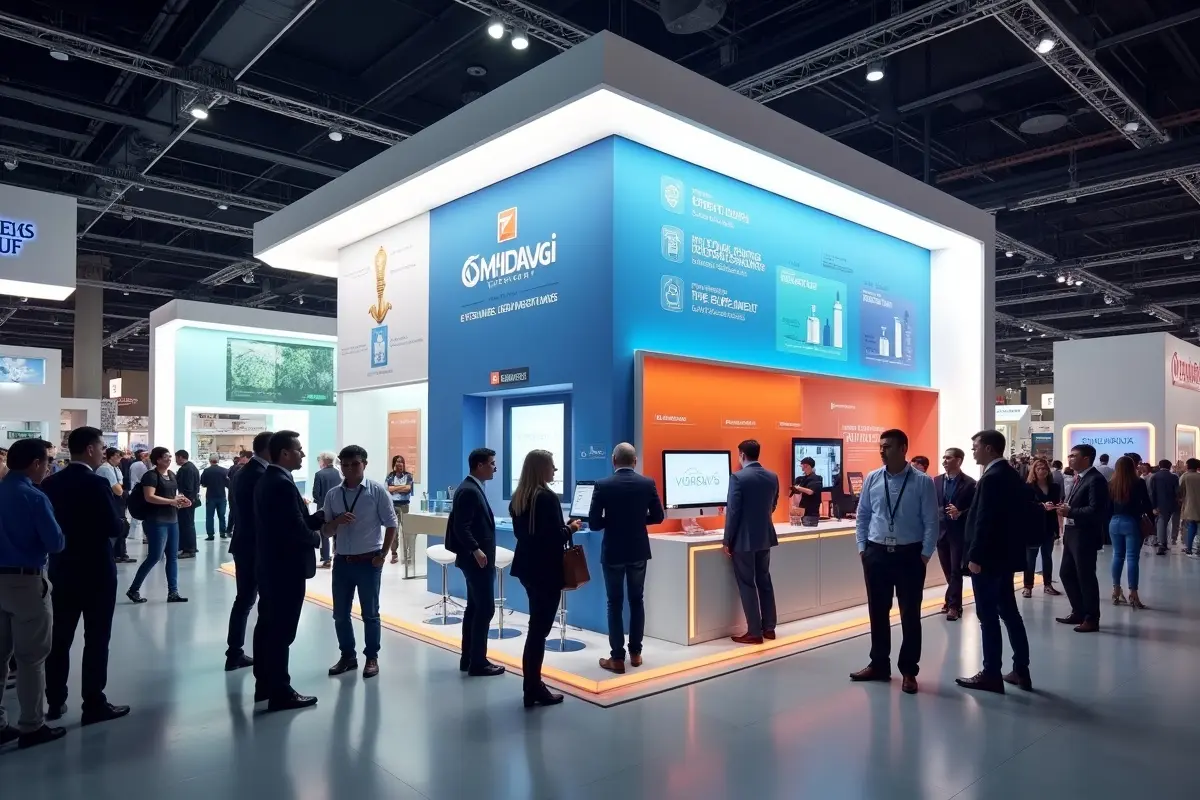
Walking a trade show floor is an exercise in snap judgements. Attendees walk past dozens of booths in mere minutes and make near-instant decisions about which brands are worth stopping for. In this kind of environment, your display is actively working on behalf of your brand before a single word is uttered.
That’s a lot of pressure for a booth to bear. But it’s also a legitimate opportunity, because brands that acknowledge this potential show up in a completely different way than those who consider their display to be an afterthought.
The First Impression—At Scale
At any given event, trade show displays are competing against others in a crowded, noisy atmosphere. Everything nearby is also trying to get people to stop. Therefore, the impression a display makes visually in the first few seconds can dictate whether or not someone slows down or continues walking. It’s a shallow way to determine what’s what. But it’s simply how people process information when they’re faced with too many options.
This is where the display’s quality matters. If graphics are dull, countertops aren’t lit well and the overall layout appears cluttered, it sends messages to the show-goer about the company they’re standing behind—even if the people inside don’t want those messages disseminated. On the contrary, well-crafted and executed trade show exhibits boast professionalism and attention-to-detail. It’s that impression that directly correlates to how someone feels about doing business with you.
Brand Cohesion and Familiarity
A major mistake brands make is acting as if their trade show experience is separate from what they do in the rest of their business. The colors, fonts, messaging and overall visual language should be translated from a website and marketing material to the exhibit. There’s no excuse if this doesn’t happen. When it does and some level of disconnect occurs, the prospects may not express their discontent verbally but they’ll absolutely feel it inside.
Cohesion breeds familiarity. If someone has seen a brand prior to stepping foot on the show floor, and the display mirrors that identity, it solidifies the impression they’ve already made in their minds. It tells them that the company is cohesive across all touch points and possesses an intentional design across the board, which goes a long way in trust-building.
Material Quality and Construction
Displays that are built to last from show to show look a certain way and so do displays that have been thrown together out of a small budget at the cost of corner cutting. Cheap materials bend, break, deteriorate and project shame upon the brand it’s representing. Quality craftsmanship boasts confidence and tells prospective buyers that this company puts effort into how it looks which is a fair assumption about how they treat their products and services, too.
This is something to consider during budgeting efforts. Oftentimes the difference in price between low quality displays and very impressive displays isn’t as great as one would expect. And the return on investment from the quality conversations held at each show they’re in play at equals an accumulation over time.
Easier Flow/Layout
A display that looks great from afar has to work effectively up close. How a booth is laid out dictates whether or not show-goers feel comfortable enough to enter, whether or not conversations can organically begin, and whether or not the primary messages can be found easily.
Product demonstrations, showcases and seating have to be strategically placed with the visitor’s experience in mind. A successful layout affords guests a natural transition from one end to the other so staff members can seamlessly engage at opportune times without awkwardly attempting to force an interaction.
Messaging That Does the Heavy Lifting
Visual design captures attention but messaging keeps it. The text on the display must communicate as quickly as possible what the company does, for whom and why that information matters. Most people aren’t going to stand there and read paragraphs on the panels; headlines with some brief support need to bear the entire weight.
This is another area where many exhibitors under-spend. Vague value propositions or generic tag lines ruin all the attention that great design has earned. Sharp, specific messaging catered to the audience drawn in from that specific event goes a long way in determining how many conversations legitimize themselves as leads.
Flexibility from Show to Show
Not every show boasts the same dimensions or configurations. A display that only works for one type of set up creates problems fast. The best designs are made to be flexible so graphics can be changed, pieces can be added or taken away, and the overall look can adapt to different floor plans without losing impact.
The sooner this is considered in the development process, the better. A display that works as well in a ten-foot inline space as it does in a larger island configuration is a far better long term investment.
Making It Work Time and Again
Brands that consistently perform well at trade shows year after year take their displays into consideration as an investment for the long haul—not as a one-off cost. They consider how they want their guests to feel, what they want them to remember and how every minute detail plays into that narrative. The intentionality is what makes this booth stand out over the years instead of blending into the background by the time it’s all over.