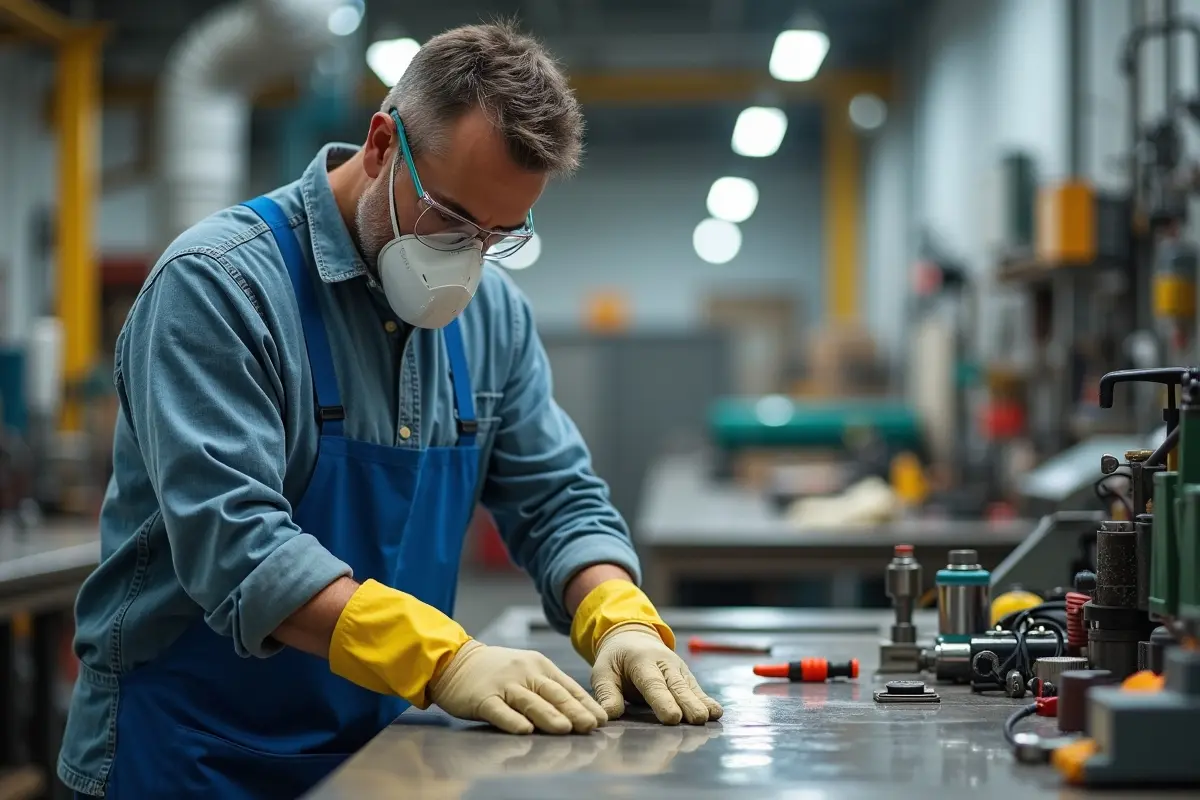
Air quality problems in workshops do not always come from major failures or obvious hazards. In many cases, they build slowly through small daily habits that seem harmless at the time. Over weeks, months, and years, those routines can contribute to higher levels of airborne dust, poor ventilation, and increased health risks for workers.
According to the UK Health and Safety Executive, wood dust exposure can contribute to asthma, dermatitis, and even certain nasal cancers. That is why everyday workshop routines matter far more than many businesses realise.
Here are some of the habits that can quietly affect air quality over time.
Skipping Regular Cleaning Around Machinery
Dust does not stay in one place for long.
When dust builds up around machinery, floors, vents, and work surfaces, it can easily become airborne again whenever equipment is used or workers move around the space. Even settled dust can continue affecting air quality if it is constantly disturbed.
Research around woodworking environments has shown that cleaning activities themselves can contribute significantly to overall dust exposure levels.
Consistent cleaning routines are essential, especially in busy workshops where fine dust accumulates quickly throughout the day.
Using Compressed Air to Clear Dust
Blowing dust away with compressed air may feel fast and convenient, but it often creates a much bigger air quality problem.
Instead of removing dust from the environment, compressed air pushes fine particles back into the air where workers can inhale them more easily. Smaller particles are particularly concerning because they can travel deeper into the respiratory system.
Vacuum systems designed for dust extraction are generally far safer than simply redistributing particles around the workshop.
Ignoring Small Changes in Extraction Performance
Dust extraction systems rarely fail all at once.
More often, performance drops gradually over time. Filters become clogged, ducting develops leaks, airflow weakens, or extraction points become less effective. Because these changes happen slowly, workers may not notice the difference immediately.
The problem is that poor extraction allows airborne contaminants to build up steadily across the workspace. Guidance around wood dust exposure highlights how changes in ventilation efficiency can affect long-term dust control in woodworking environments.
Even small reductions in airflow can have a lasting impact on workshop air quality.
Leaving Dust on Work Clothes
Dust exposure does not always end when the task itself is finished.
Workers who continue wearing dusty clothing throughout the day may keep reintroducing particles into the air every time they move. Dust carried on sleeves, gloves, or aprons can continue circulating around shared spaces long after machinery has stopped running.
Over time, this contributes to a workshop environment where fine particles remain consistently present in the air.
Neglecting Ventilation During Colder Months
During winter, many workshops reduce airflow to keep spaces warmer.
Doors stay closed, ventilation systems may be used less aggressively, and natural airflow decreases. While understandable, this can allow airborne dust and contaminants to build up much more easily indoors.
Poor ventilation becomes especially problematic in workshops handling sanding, cutting, or machining tasks that generate fine dust continuously throughout the day.
Treating Short Tasks as Low Risk
Many workers assume quick sanding, cutting, or trimming jobs create minimal exposure because the task only lasts a few minutes.
In reality, repeated short-duration tasks throughout the day can still generate significant airborne dust levels over time. HSE guidance specifically warns that even brief woodworking tasks can create serious exposure risks if controls are ineffective.
Small exposures repeated daily can eventually become a major long-term concern.
Delaying Equipment Maintenance
Workshop machinery naturally produces more dust when blades become dull, seals weaken, or systems are not maintained properly.
Older or poorly maintained equipment may create finer airborne particles while also placing more strain on extraction systems. This combination can quietly worsen workshop air quality without workers fully realising it.
Regular maintenance is not only important for productivity and safety but also for keeping dust generation under control.
Small Habits Can Shape Workshop Conditions Over Time
Air quality is rarely affected by one single issue alone. More often, it reflects the small routines and decisions repeated every day inside a workshop.
The businesses that maintain healthier environments are usually the ones that pay attention to those small habits consistently instead of waiting for larger problems to appear.